What is rosin and hash? A guide to the concentrates we carry
October 19, 2026
Hash and rosin are concentrates. It's the same plant minus the leaves and stems — only the most valuable part is left: the resin glands that hold the flavor, the aroma and the cannabinoids. That's why concentrates are stronger than flower and smell more intense. The difference between the types comes down to how that resin is collected and what happens to it next.
In short
- Concentrates are made either with solvents or without them. Everything in our catalog right now is solventless — made with water, ice, screens and a press, with no chemicals involved.
- Hash is collected trichomes. Rosin is hash or flower pressed with heat.
- The narrower the micron range on the label, the more carefully the material was selected.
What is a concentrate, and how is it different from flower?
Look at a good bud up close and you'll see it's covered in tiny, shiny crystals. These are trichomes — glands the plant grows to protect itself from heat and insects. They hold almost everything people value cannabis for: cannabinoids and terpenes, which give it its flavor and aroma.
A concentrate is what you get when those trichomes are separated from the plant. With less plant material left, the flavor is denser and the effect is stronger than flower of the same strain. That's why we tell everyone trying concentrates for the first time the same thing: you need noticeably less than you're used to with flower, and there's no need to rush.
Types of concentrates: solvent-based and solventless
The industry splits all concentrates into two big camps.
Solvent-based — extracts made with solvents such as butane, propane or ethanol. This is how shatter, wax, badder and vape distillate are made. The process is precise, but it needs lab equipment and a final step to purge the solvent.
Solventless — everything made without chemicals: just water, ice, screens, pressure and heat. This includes dry sift, ice water hash (ice-o-lator), fresh frozen and rosin. Solventless is seen as the top of the craft today: it's harder and more expensive to make, but there's nothing in it except the plant itself.
What is hash, and how is it made today?
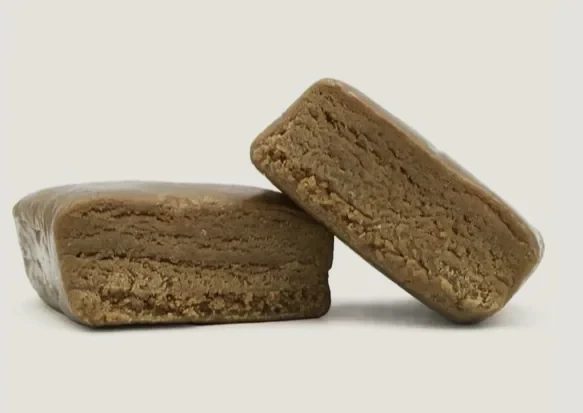
Hash is the oldest concentrate in the world. For centuries it was made by hand: people rubbed the flowering plant between their palms (that's how charas is made) or shook dried buds over cloth and pressed the collected powder into blocks.
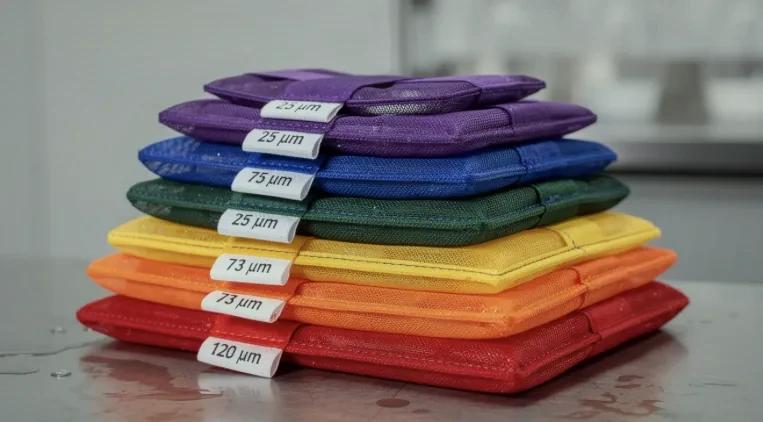
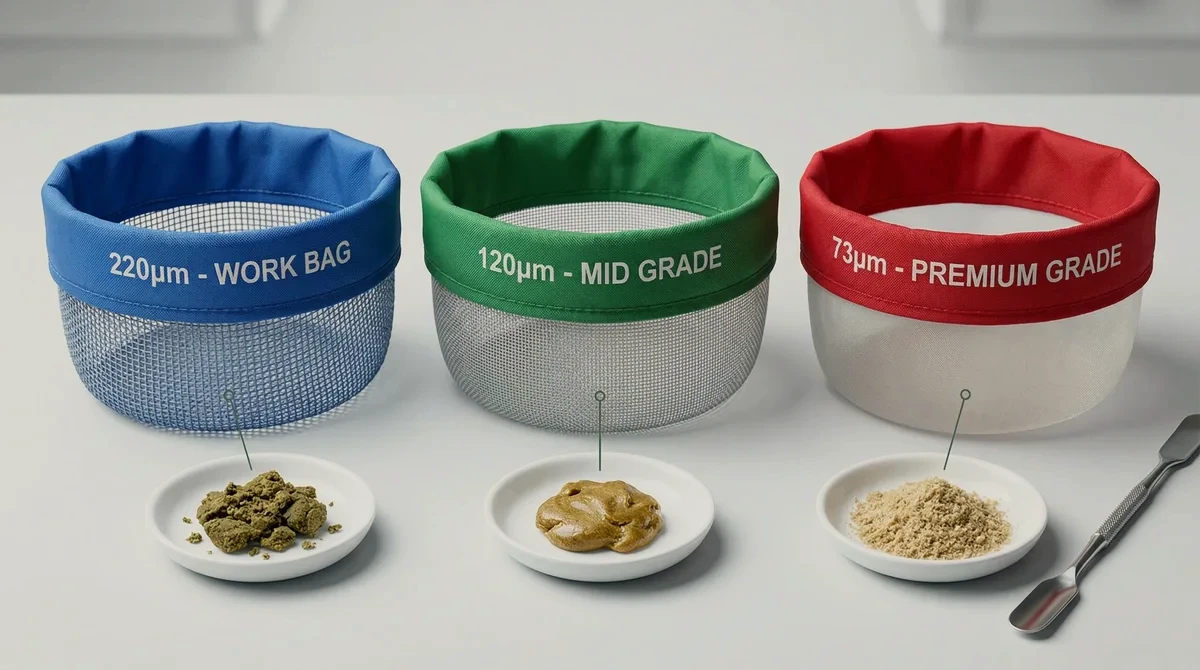
Modern hash is made differently — with water and ice. Fresh plant material goes into ice-cold water and is gently stirred. The cold makes the trichomes brittle so they snap off, and then the water is filtered through a set of mesh bags with different screen sizes. The result is ice water hash, also called bubble hash.
What do the microns on the label mean?
A micron (u, μm) is the screen size the trichomes passed through. The most valuable trichome heads are usually caught somewhere between 70 and 120 microns: that's where you find the most resin and the least plant matter. The smallest grades carry more plant particles, and the largest catch stalks and immature glands.
So when you see a narrow range like 90–120u on the label, it means the hashmaker kept only the heart of the run. A wide range, like 45–160u, is nearly the whole harvest: it costs less and has a simpler, fuller profile. You'll also see the term full spectrum — that's when all the grades go into the hash together, with no selection.
What is fresh frozen?
Fresh frozen is a type of starting material, not a separate kind of concentrate. The plant is cut and frozen right away, without drying. That way it keeps its most volatile terpenes, which partly escape during drying and curing. Fresh frozen material is made into fresh frozen hash, and that hash is pressed into live rosin. Anything that starts with the word “live” is made from frozen plants, not dried ones.
What is curing? Curing is the slow aging of buds after they've been dried. They're sealed in airtight jars and kept for several weeks at a steady humidity of around 58–62%, with the lids opened now and then to let excess moisture out (growers call this “burping”). Over that time the moisture evens out inside each bud, leftover chlorophyll breaks down, the smoke gets smoother and the flavor gets deeper. Think of it like aging wine or cheese: without a proper cure, flower smokes harsh and smells grassy. But curing has a cost — some of the lightest terpenes escape along the way. That's why for live products the plant is frozen right after harvest and skips both drying and curing.
That's what gives fresh frozen hash its signature: a fresh, bright, “living” aroma — closer to the smell of a growing plant than to dried buds.
What is rosin?
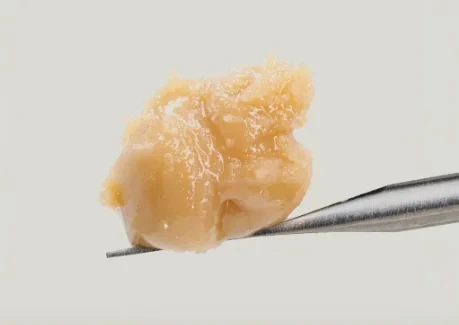
Rosin is resin squeezed out of the starting material with a press and gentle heat. No solvents, no chemicals: just two heated metal plates, parchment paper, a filter bag and pressure. The heat melts the trichomes, the clean resin flows onto the parchment, and the plant material stays in the bag.
There are three kinds of rosin, and the difference is big:
- Flower rosin — pressed straight from buds. Faster and simpler, but lower in flavor and purity.
- Hash rosin — pressed from hash. The material is first cleaned with water and ice, then pressed. The result is cleaner and more concentrated.
- Live rosin — hash rosin made from fresh frozen material. It's the top of the solventless category: the most terpenes, the most complex process and the highest price.
Rosin comes in different textures, from a clear oil to a thick badder or “jam”. That depends on the strain, the temperature and how the rosin was cured after pressing. Texture affects flavor and quality less than most people think.
How do the effects of hash and rosin differ?
Honestly, there's no general rule like “this type always feels one way and that one another”. The effect depends mostly on the strain and its terpene profile, and only then on the type of concentrate.
But there is a difference in strength. Old school hash feels softer and closer to the flower you know. Ice water and fresh frozen hash are denser and more aromatic. Rosin is the most concentrated of all: people choose it for flavor and purity, and it's the one where taking it slow matters most.
If you're trying concentrates for the first time, start with hash, and move on to rosin once you know how hash affects you.
Which one is right for you
- Old School Haze — if you want classic hash with no frills at a fair price. A good way to get to know the category.
- Fresh Frozen — if aroma matters most. Apple Banana Zoap and Gas Fanta are two of our bestsellers, both with a bright fruity-and-gassy profile.
- Fresh Frozen Premium — Gas Fanta from the select 90–120u grade. It's the same strain as in the regular line, but taken from the heart of the run, so it's cleaner and richer in flavor. Sold in 3 g packs.
- Live Rosin — for people who already know concentrates and want maximum flavor. Guava x TMZ and Sour Papaya are tropical strains with a pronounced sweetness.
Delivery in Phuket usually takes up to 60 minutes and is free on orders from ฿1,000 (about US$30). To other cities in Thailand and to the islands we ship by post, which takes 2–3 days.
How should you store concentrates?
Terpenes are the most fragile part of a concentrate: heat, light and air all damage them. In Phuket's hot climate you'll notice this quickly.
- Keep them in a closed glass or silicone container, away from the sun.
- Don't leave them in a car, on a scooter or by a window.
- Rosin is best kept in the fridge: that way it holds its flavor and texture longer.
- Hash can be stored at room temperature, but in tight packaging so it doesn't dry out.
Frequently asked questions
It's cannabis resin pressed out with heat, with no solvents. It's made from flower, hash or fresh frozen material — the last kind is called live rosin.
Hash is collected trichomes; rosin is the resin pressed out of them. Rosin is cleaner and more concentrated, while hash is milder and more affordable.
The plant was frozen right after harvest, without drying. That keeps more terpenes, so the concentrate smells fresher.
The same amount of material yields the least of it, and the process is the most labor-intensive: freezing, ice water, screens, drying, pressing.
It's aging dried buds in sealed jars at a steady humidity, usually for several weeks. Curing makes the smoke smoother and the flavor deeper, but some of the lightest terpenes are lost — which is why live products skip it.
Want to see what's in stock right now? Browse the concentrates catalog. Not sure where to start? Message us on Telegram and we'll help you choose by flavor and format.