Ways to consume cannabis: from Scythian braziers to the vaporizer
November 2, 2026
Every way to consume cannabis comes down to one thing: heat. The THCA in a bud only turns into active THC when it gets hot. From hot stones in the braziers of ancient nomads to vaporizers accurate to the degree, people have chased the same balance: get what the plant has to offer and lose as little as possible on the way. Here is how it was done 2,500 years ago, how different countries do it today, and how smoking, vaporizers, concentrates and edibles compare.

In short
- The oldest direct evidence is wooden braziers with heated stones, about 2,500 years old, found in the Pamir mountains.
- Every region built its own culture: bhang in India, kif and the sebsi pipe in Morocco, the bamboo bong in Southeast Asia, the chalice in Jamaica.
- Burning is the crudest method: part of the cannabinoids and terpenes burn away, and you inhale combustion products.
- A dry herb vaporizer heats the bud without fire, usually to about 160–220 °C, and keeps more of the aroma.
- Edibles kick in later and last longer than smoking — that is behind most bad surprises.
How people used cannabis in ancient times: stones, braziers and altars
In 2019, Chinese archaeologists published a find from the Jirzankal cemetery in the Pamirs, about 3,000 metres up, in Science Advances. The tombs held wooden braziers with burnt stones, and chemical analysis found traces of THC on them. Cannabis was placed on the hot stones and the smoke filled an enclosed space. The find is about 2,500 years old — the earliest direct proof that people heated cannabis for its effect. Interestingly, its THC level was noticeably higher than in wild plants of the time.
The find backed up Herodotus. Around 440 BCE he described Scythians throwing hemp onto red-hot stones inside a felt tent and “howling with pleasure”.
Another find is the shrine at Tel Arad in southern Israel, 8th century BCE. One of its two altars held cannabis residue mixed with animal dung. Dung gives a slow, not-too-hot fire, so the resin could evaporate instead of simply burning. In effect, it was an ancient attempt to control temperature.
How cannabis is consumed around the world
India: bhang and the chillum
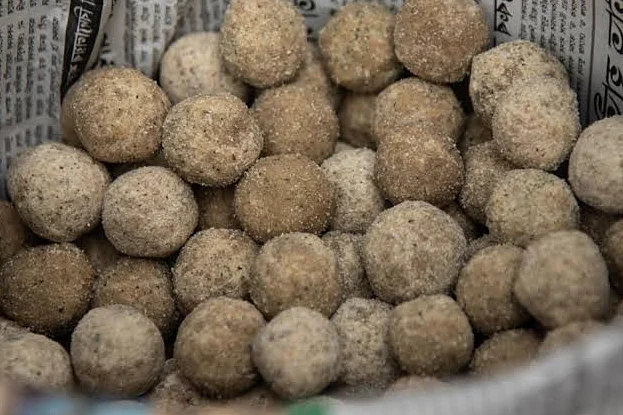
Here cannabis is drunk and eaten rather than smoked. The leaves are ground into a paste and mixed with milk, spices and sugar to make bhang thandai and bhang lassi. Bhang is linked to the god Shiva and traditionally goes with the Holi and Maha Shivaratri festivals. In Varanasi it is made right on the ghats. India's 1985 narcotics law does not ban bhang, because it is made from leaves, not flowers or resin, and some states, such as Uttar Pradesh, have licensed bhang shops. India is also home to the chillum, a straight clay pipe smoked through cupped hands, traditionally with charas.
Morocco: kif and the sebsi pipe
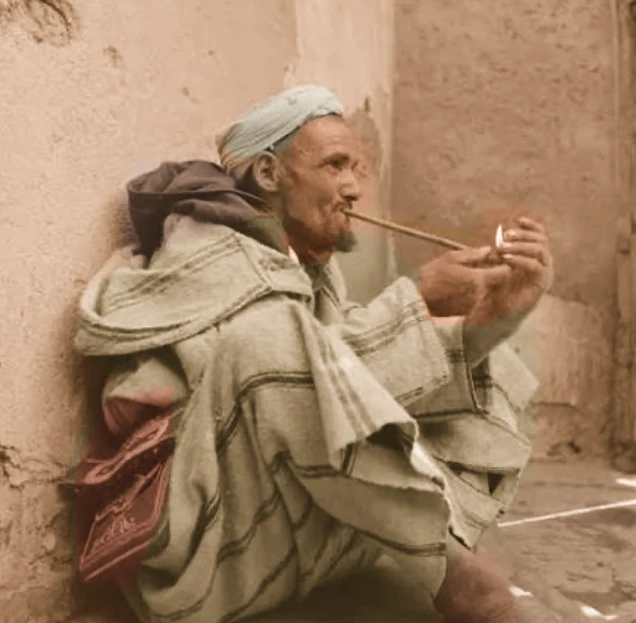
Cannabis has been grown in the Rif mountains for centuries. Traditional kif is the finely chopped best parts of the plant mixed with tobacco. It is smoked in a sebsi, a long wooden pipe with a tiny clay bowl and a small metal screen. The bowl holds very little: a puff or two, and it gets packed again.
What is a bong, and where does the word come from?
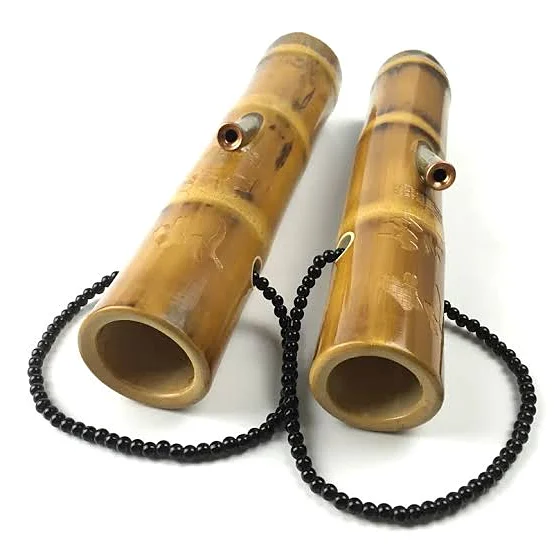
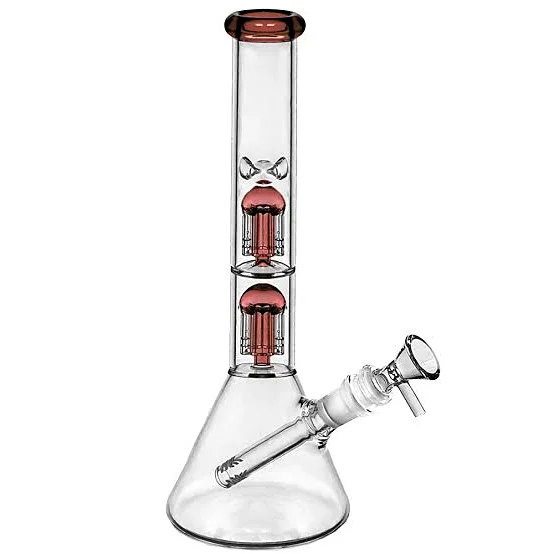
A bong is a water pipe: the smoke passes through water, cools down and gets smoother. The word itself most likely comes from Thai. A 1944 Thai–English dictionary defines “bong” as a “bamboo water pipe for smoking ganja”. Villages in Thailand and Laos made such bamboo pipes for centuries, and in Thailand cannabis leaves were long used in folk medicine and as a seasoning. Our glass gravity bong is in the accessories section of the catalog.
Jamaica: the chalice
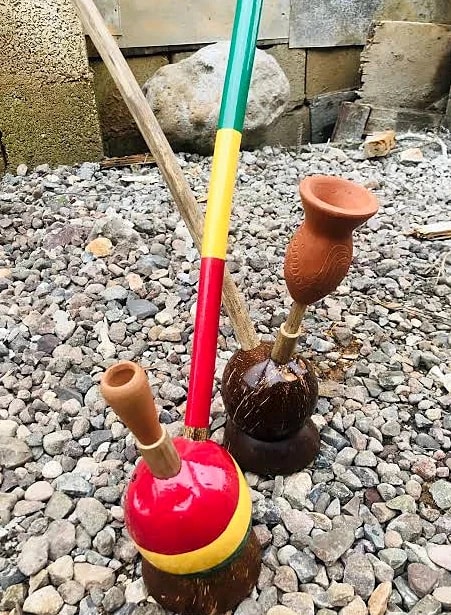
For Rastafari, cannabis is part of spiritual practice, and the chalice — a large water pipe, often made from a coconut shell — is passed around the circle during ceremonies.
Europe and North America: the joint
In Europe, flower is traditionally mixed with tobacco, a habit that came from hash culture. In the US and Canada people smoke pure flower, and in recent years more and more of them use a vaporizer.
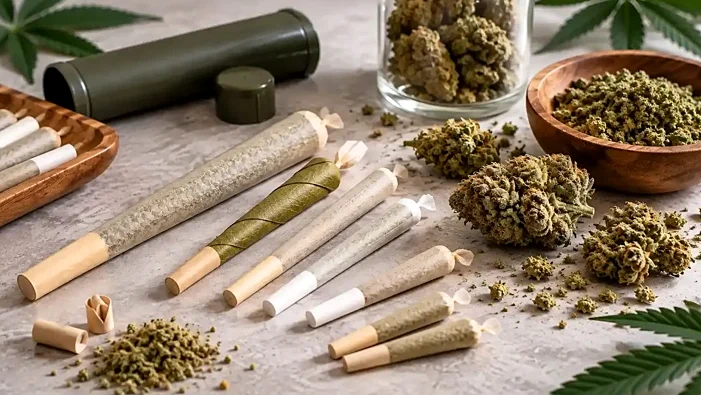
Smoking vs vaporizer vs concentrates vs edibles
| Method | Heat | When the effect starts | Key point |
|---|---|---|---|
| Smoking: joint, pipe, bong | Open flame, hundreds of degrees at the burning tip | Within minutes | Part of the THC and terpenes burns away; smoke brings combustion products |
| Dry herb vaporizer | No flame, about 160–220 °C | Within minutes | More flavour and aroma, far fewer combustion products |
| Concentrates in a dab rig | Heated bowl or electronic heating | Within minutes | Concentrated product, needs its own device |
| Edibles | Heated during cooking | 30 minutes to 2 hours | Stronger and longer; easy to overdo |
Burning
When you light a bud, the burning tip gets hundreds of degrees hotter than needed. Part of the THC and terpenes simply burns off, and the smoke carries tar and other combustion products, like any smoke. The water in a bong cools the smoke but does not remove those products.
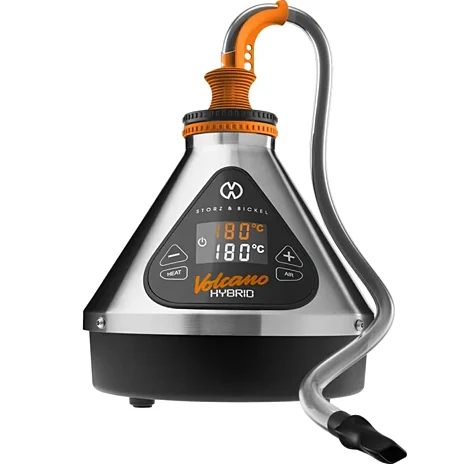
What is a vaporizer and how does a dry herb vaporizer work?
A vaporizer heats the bud to the point where cannabinoids and terpenes turn into vapour, but the plant does not burn — usually about 160 to 220 °C. Lower temperatures give brighter flavour and a softer effect; higher ones give denser vapour.
Convection or conduction?
- Conduction — the bud sits in a chamber and is heated by its walls, like a frying pan. Simple and compact, but heating is less even.
- Convection — hot air flows through the bud, like a fan oven. Heating is more even and the taste is cleaner.
The first truly famous vaporizer was the German Volcano: its creator Markus Storz released it in 2000 after several years of prototypes. The vapour collects in a clear balloon bag. Medical versions of this maker's devices are used by patients in Europe and Canada, where cannabis is prescribed by doctors.
Concentrates
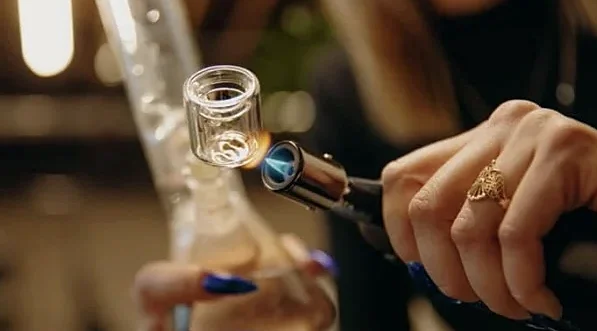
Rosin and other concentrates are heated in a dab rig, a glass water pipe with a bowl that gets red-hot. Modern electronic dab rigs hold a set temperature on their own, without a torch. We cover concentrates in detail in “What is rosin and hash?”.
Why do edibles work differently?
Bhang shows that people started eating cannabis a very long time ago. Today it is gummies, chocolate, baked goods and drinks.
The key difference from smoking is the route. For cannabis in food to work, it is first decarboxylated — heated — and then dissolved in fat: oil, butter, cream or ghee. After you eat it, THC passes through the liver and turns into 11-hydroxy-THC, which acts stronger and longer. That is why:
- the effect does not come at once, but after 30 minutes to 2 hours;
- it lasts noticeably longer than smoking;
- the most common mistake is deciding it “didn't work” and eating more.
In Canada, edibles have been sold legally since 2019, and the THC per package is capped by law precisely because of the risk of overdoing it.
What to know in Thailand
Thailand has its own rules on how cannabis is used. Smoking in public places is banned. Selling flower for smoking on a shop's premises is banned too, except as treatment by a specialist. E-cigarettes and vapes are banned under a separate law. Before you bring or use any heating device, check the current requirements. We cover where you can and can't smoke in “Can You Smoke Weed in Your Hotel in Thailand?”.
FAQ
Smoking (joint, pipe, bong), a vaporizer, concentrates in a dab rig, and edibles. All of them come down to heat: THCA only becomes active THC when heated.
A vaporizer heats the bud without lighting it, usually to about 160–220 °C. Cannabinoids and terpenes turn into vapour, with far fewer combustion products.
Convection heats the bud with hot air, more evenly and with a cleaner taste. Conduction heats it from the chamber walls — simpler and more compact.
Most likely from a Thai word for a bamboo pipe. A 1944 dictionary describes it as a “bamboo water pipe for smoking ganja”.
After eating, THC passes through the liver and becomes 11-hydroxy-THC, which acts stronger and longer. The effect starts after 30 minutes to 2 hours.
The oldest direct evidence is braziers with hot stones in the Pamirs, about 2,500 years old. Herodotus described a similar custom among the Scythians.
Browse our catalog. Questions? Message us on Telegram.
This article is for information only. It is not legal advice: rules change, so check the current requirements. Sales by prescription only.
Sources
- Ren M. et al. The origins of cannabis smoking: Chemical residue evidence from the first millennium BCE in the Pamirs. Science Advances, 2019.
- Arie E., Rosen B., Namdar D. Cannabis and Frankincense at the Judahite Shrine of Arad. Tel Aviv: Journal of the Institute of Archaeology of Tel Aviv University, 2020.
- Herodotus. Histories, Book IV.
- Narcotic Drugs and Psychotropic Substances Act (India), 1985; materials on bhang and licensing in Uttar Pradesh.
- McFarland G. B. Thai-English Dictionary, 1944.
- Storz & Bickel: history of the Volcano vaporizer (2000).